 By Admin
 My Husband Passed Away After 62 Years of Marriage — At His Funeral, a Young Girl Handed Me a Letter That Changed Everything
After sixty-two years of marriage, I believed there were no secrets left between my husband and me.
We had built a lifetime together. Shared every joy, every hardship, every ordinary moment that quietly becomes priceless over the years.
So when he passed away, I thought the hardest part would simply be learning how to live without him.
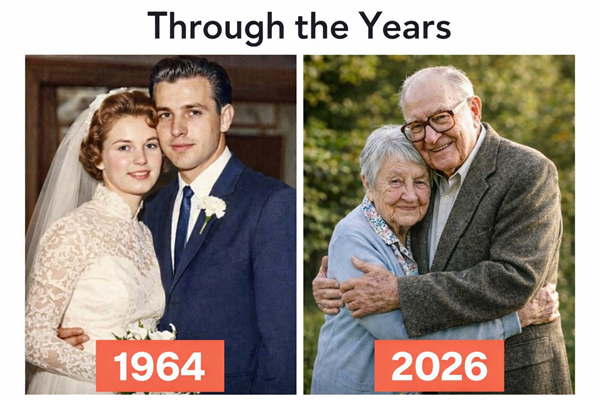
I was wrong.
Because at Harold’s funeral, a young girl I had never seen before walked up to me, pressed an envelope into my hands, and whispered words that would change everything I thought I knew about my husband.
“He told me to give this to you today,” she said softly.
Then she disappeared before I could ask a single question.
That moment became the beginning of a story Harold had carried silently for more than sixty years.
My name is Rosa.
I met Harold when I was only eighteen years old. He was kind, patient, and steady in a way that made the world feel safe. We married less than a year later and spent the next six decades building a life side by side.
We raised children together. Buried parents together. Celebrated anniversaries, birthdays, and small victories that most people never notice until they’re gone.
By the time Harold passed away at eighty-four, I could not remember what life felt like before him.
The funeral was unbearable.
People filled the church with flowers, casseroles, and sympathy that blurred together into meaningless noise. I smiled when expected, nodded politely, and tried not to collapse beneath the weight of grief pressing against my chest.
After the service ended, guests slowly began leaving.
That was when I noticed the girl.
She could not have been older than thirteen. Thin, nervous, dark hair pulled into a loose braid. She stood near the back pews clutching something tightly in both hands.
At first I assumed she belonged to another family attending a different service.
Then she walked directly toward me.
“Are you Harold’s wife?” she asked carefully.
“Yes,” I answered.
Without another word, she handed me a white envelope.
“My name is Gini,” she said quietly. “Harold told me I had to give this to you on the day of his funeral. Not before.”
I stared at her in confusion.
“How did you know my husband?”
But before I could stop her, she turned and hurried out of the church doors.
I stood frozen with the envelope in my hands.
My oldest son noticed immediately.
“Mom? What is it?”
“Nothing,” I lied softly, slipping it into my purse.
But all evening, the envelope felt heavier than stone.
Hours later, after relatives finally left and the house fell silent, I sat alone at the kitchen table and opened it.
Inside was a letter written in Harold’s unmistakable handwriting.
A small brass key slid onto the table beside it.
My hands trembled as I unfolded the paper.
“My dearest Rosa,
If you are reading this, then I am gone, and I no longer have the courage to tell you this face to face.
There is something I should have explained many years ago. I convinced myself I was protecting everyone by staying silent, but secrets do not disappear. They wait.
The key opens Garage 122 at the address below.
Everything you deserve to know is there.
Please forgive me.
Love always,
Harold.”
I read the letter three times.
My heart pounded harder with every sentence.
At first I told myself I would wait until morning.
Instead, less than an hour later, I called a taxi.
The storage garage sat on the edge of the city in a forgotten industrial area lined with rusted metal doors and broken streetlights.
Garage 122 stood near the end of the row.
For several seconds, I could not force myself to move.
Then I slid the key into the lock.
The door creaked open slowly.
Dust filled the air.
Inside, beneath a hanging lightbulb, sat a large wooden chest covered in years of dirt and cobwebs.
I stepped closer carefully and lifted the lid.
The contents stole the breath from my lungs.
Inside were children’s drawings.
Birthday cards.
Photographs.
School certificates.
Bundles of old letters tied together with faded ribbons.
Every letter ended with the same name.
Virginia.
At the bottom of the chest sat several folders filled with receipts, bank statements, and handwritten notes dating back decades.
As I read through them, a terrible thought formed in my mind.
Harold had secretly supported another family for over sixty years.
I sank onto the cold concrete floor, unable to breathe properly.
“No…” I whispered.
The silence around me felt enormous.
Then I heard footsteps outside.
I turned and saw the same young girl standing in the doorway beside a bicycle.
“I thought you might come tonight,” she said gently.
I stared at her.
“Who are you?”
“My mother is Virginia.”
The name hit me like ice water.
I looked back at the letters scattered across the floor.
“Was Harold your grandfather?”
She shook her head slowly.
“No. But he helped us my whole life.”
I struggled to steady my voice.
“Take me to your mother.”
Gini hesitated before nodding.
“She’s in the hospital.”
The drive there felt endless.
Virginia lay pale and exhausted beneath thin hospital blankets, tubes connected to both arms. She looked older than her years, worn down by illness and hardship.
When she saw me standing in the doorway, tears immediately filled her eyes.
“You’re Rosa,” she whispered.
I nodded slowly.
For several moments, neither of us spoke.
Then Virginia finally explained everything.
More than sixty years earlier, her mother had been abandoned shortly after giving birth to her. She had nowhere to go and no family willing to help.
Except Harold.
He found them struggling and stepped in quietly, paying rent, buying food, helping with school expenses, and visiting whenever he could.
“He saved our lives,” Virginia said softly. “Without him, we wouldn’t have survived.”
I listened in stunned silence.
Part of me still feared the answer to the question growing inside my chest.
“Who was your mother?” I asked carefully.
Virginia reached toward the bedside table and handed me an old photograph.
The second I saw it, my knees nearly gave out.
The young woman standing beside Harold was someone I recognized instantly.
My sister Iris.
My older sister who vanished from home when I was fifteen and was never seen again.
I stared at the photo in disbelief.
“That’s impossible,” I whispered.
But suddenly everything made sense.
The timing.
The secrecy.
The guilt Harold carried for so many years.
Later that night, I returned home and searched through Harold’s old belongings until I found a journal hidden in the back of our closet.
Inside, he had written the truth.
After Iris ran away, Harold accidentally found her living in poverty with a newborn baby. By then, she was sick, frightened, and ashamed to contact our family.
Harold promised to help her.
And he kept that promise for the rest of his life.
He hid it from me because Iris begged him not to reopen old family wounds. After she died years later, Harold continued caring for Virginia quietly, believing it was the only honorable thing to do.
He never betrayed me.
He protected my sister’s child when nobody else would.
I sat awake until sunrise holding that journal against my chest and crying harder than I had even at the funeral.
Not from anger.
From heartbreak.
Because Harold had carried this burden alone for more than six decades.
The next morning, I returned to the hospital.
Virginia looked frightened when I entered the room, as though she expected rejection.
Instead, I sat beside her bed and took her hand.
“You’re my niece,” I told her gently.
Then I looked at Gini.
“And that makes you my family too.”
For a second, nobody moved.
Then Gini wrapped her arms around me so tightly I could barely breathe.
And in that moment, something extraordinary happened.
The grief that had consumed me since Harold died suddenly changed shape.
Because the man I mourned had not lived a double life.
He had spent sixty years quietly holding a broken family together.
And even after death, he found a way to bring us home to one another.