By Admin
Watching a parent, grandparent, or elderly loved one grow older is one of life’s most emotional experiences. Aging brings many physical and mental changes, but sometimes those changes may signal something more significant.
While no one can accurately predict how long someone will live, healthcare professionals have identified several patterns that often appear during the last year of life. Recognizing these signs doesn’t mean the end is immediate. Instead, it gives families the opportunity to spend meaningful time together, prepare emotionally, and ensure their loved one receives the best possible care.
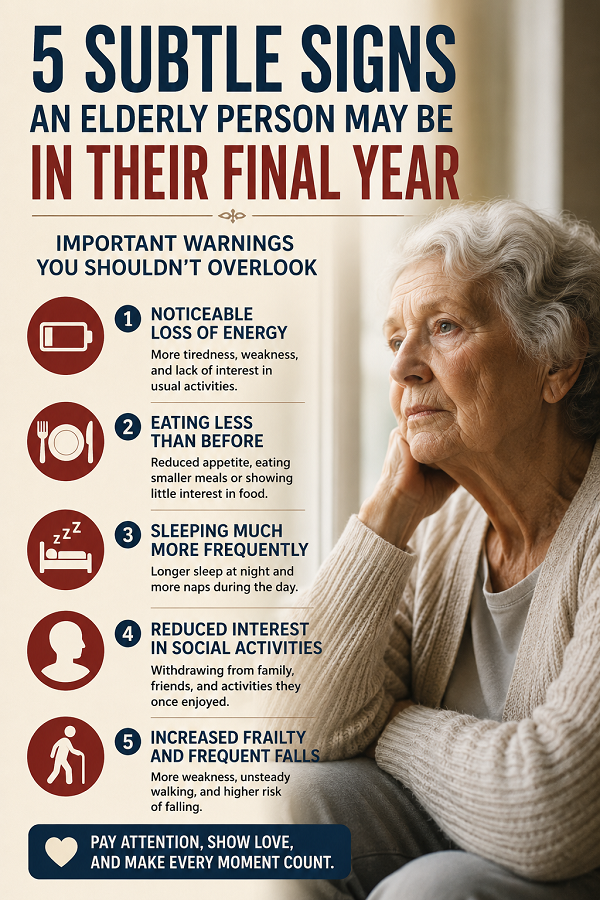
Here are five subtle signs that should never be ignored.
1. Noticeable Loss of Energy
One of the earliest changes families often observe is a gradual decline in energy levels.
An older adult who once enjoyed gardening, walking, cooking, or socializing may begin spending much more time resting or sleeping. Even simple daily activities such as getting dressed, preparing meals, or walking across the room can become exhausting.
This happens because the body’s organs and muscles naturally become less efficient over time, requiring more energy to perform everyday tasks.
Although fatigue is common with aging, a sudden or significant increase in weakness should always be discussed with a healthcare professional, as it may also be related to treatable medical conditions.
2. Eating Less Than Before
Many elderly people naturally eat smaller meals as they age, but a dramatic decrease in appetite may deserve closer attention.
Several factors can contribute, including:
- Reduced sense of taste and smell
- Difficulty chewing or swallowing
- Digestive changes
- Chronic illness
- Medication side effects
As the body begins slowing down, it often requires fewer calories. Families may notice that their loved one only wants a few bites of food or prefers liquids over solid meals.
It’s important not to force eating but instead focus on offering favorite foods, small portions, and staying well hydrated whenever possible.
3. Sleeping Much More Frequently
Sleep patterns often change during later stages of life.
Someone who previously stayed active throughout the day may begin sleeping longer at night while also taking multiple naps during the day.
This increased need for sleep occurs because the body is conserving energy.
However, excessive sleepiness can also be associated with:
- Infections
- Medication changes
- Heart problems
- Depression
- Neurological conditions
If this change happens suddenly, medical advice is recommended.
4. Reduced Interest in Social Activities
Many families notice emotional changes long before physical ones.
An elderly loved one may stop attending family gatherings, decline invitations, avoid phone calls, or spend more time quietly reflecting.
Sometimes this is simply part of aging. In other cases, it may be connected to:
- Hearing loss
- Vision changes
- Depression
- Anxiety
- Fatigue
- Progression of chronic illness
Rather than assuming they want to be left alone, continue offering companionship without pressure. Even sitting together quietly can provide tremendous comfort.
5. Increased Frailty and Frequent Falls
Frailty often develops gradually.
Muscles naturally weaken with age, making balance more difficult and increasing the risk of falls.
You may notice your loved one:
- Walks more slowly
- Needs assistance standing
- Uses furniture for balance
- Has difficulty climbing stairs
- Experiences unexplained weight loss
Falls are one of the leading causes of injury among older adults and should always be taken seriously.
Simple home modifications—such as removing loose rugs, improving lighting, and installing grab bars—can significantly reduce risks.
When Should You Be Concerned?
None of these signs alone mean that someone is approaching the end of life.
However, when several of these changes occur together, especially alongside worsening chronic illness, they may indicate increasing physical decline.
Healthcare providers often look at the overall pattern rather than one symptom by itself.
If you’re concerned about a loved one, schedule an appointment with their doctor. Early conversations about medical care, comfort, and future wishes can provide peace of mind for everyone involved.
How Families Can Offer Support
The most valuable gift you can give an aging loved one is your time.
Simple acts often mean the most:
- Listen to their stories.
- Visit regularly.
- Look through old family photos.
- Share meals together.
- Encourage gentle activity if appropriate.
- Help manage medications and appointments.
- Ask how they’re truly feeling.
Many older adults value connection even more than conversation.
A Gentle Reminder
Growing older is a natural part of life, and every person’s journey is different.
Some people remain active well into their 90s, while others experience health changes much earlier. These signs are not guarantees that someone is in their final year—they are simply patterns that healthcare professionals commonly observe in older adults experiencing advanced decline.
Paying attention to these changes allows families to respond with compassion rather than fear.
Sometimes the greatest gift isn’t finding more time—it’s making the most of the time you already have.
Frequently Asked Questions
Can doctors predict when someone has one year left to live?
No. Doctors cannot accurately predict an exact timeline. They use overall health, chronic illnesses, functional decline, and multiple symptoms to estimate prognosis, but every individual is different.
Is sleeping more always a bad sign?
Not necessarily. Many older adults naturally sleep more with age. However, sudden or extreme increases in sleep should be discussed with a healthcare provider.
Should I worry if my elderly parent eats less?
Reduced appetite is common in older adults, but ongoing weight loss, dehydration, or difficulty swallowing should always be evaluated by a medical professional.
What is the biggest warning sign?
There is no single warning sign. A combination of increasing weakness, loss of appetite, frequent sleeping, social withdrawal, and frailty may suggest significant health decline and should prompt medical evaluation.
Disclaimer: This article is for educational purposes only and should not be considered medical advice. If you have concerns about an elderly loved one’s health, consult a qualified healthcare professional for evaluation and guidance.