 By Admin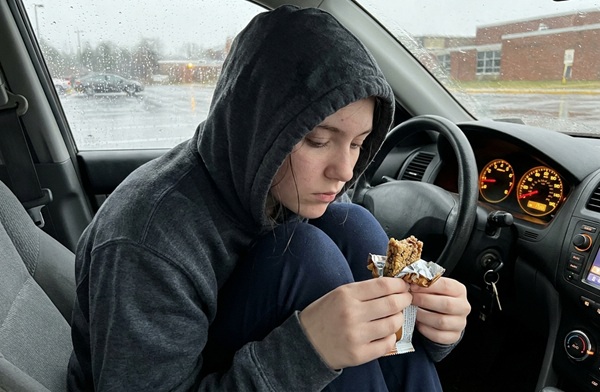
When my 15-year-old daughter, Harper, asked to live with her dad after the divorce, I said yes.
Not because I wanted to. I would’ve given anything to keep her under my roof every night. But I didn’t want to be the reason she and her father never rebuilt what the split had broken. She still came to me on weekends, whenever she wanted. Just not every day.
She’d missed Ray. Her easygoing dad who flipped pancakes at midnight and showed up to her softball games in a backwards cap. And Ray seemed ready this time. Ready to be steady. Present.
So I let her go.
I told myself space wasn’t the same as losing her.
I didn’t expect the silence that followed to hollow me out.
At first she called constantly. Silly selfies, updates about taco nights with her dad, pictures of lopsided pancakes and her laughing at her own mess.
I kept every one. Replayed every video twice, three times. I missed her, but I told myself this was right. This was what she needed.
She sounded lighter. Freer. I wanted so badly to believe that meant she was fine.
Then the calls thinned out. Texts turned into single words. Words turned into nothing.
And the school started calling instead.
First, her English teacher. “She’s missing three assignments, Nadia. It’s not like her.”
Then her guidance counselor, between what sounded like bites of lunch. “She seems checked out lately. Everything okay at home?”
Then the one that stopped my heart. Her chemistry teacher.
“We caught her copying answers off another student. That’s not who she is. She just looked… gone.”
Gone.
Not defiant. Not acting out. Just gone.
That word sat in my chest like a stone. My daughter double-checked her homework twice before turning it in. She cried over a B-plus.
I called her that night. Straight to voicemail. I left a message and waited.
Hours passed. Nothing.
I sat on my bed staring at the last photo she’d sent — her and Ray grinning over a pizza they’d clearly burned. It used to make me smile.
That night it just felt like a warning I hadn’t read.
I called Ray. Careful. Neutral. The tone every divorced mother learns, the one that keeps you from being called dramatic.
He sighed. Tired, dismissive.
“She’s a teenager, Nadia. They slack off. You’re spiraling again.”
Spiraling. I hated that word almost as much as I hated how familiar it was.
He’d said something close to it when Harper was a colicky newborn — three sleepless nights, me on the bathroom floor with a screaming baby, him snoring through it.
“You worry too much,” he’d mumbled then. “She’ll be fine.”
I’d believed him, because believing him was easier than facing the alternative: that I was doing this alone.
Here we were again. Harper crying without a sound this time. Ray still turning away from it.
But this time, looking away wasn’t going to be free.
One Wednesday, I didn’t call ahead. I drove straight to her school and waited in the parking lot in a cold drizzle that blurred everything at the edges.
When the doors opened, kids spilled out laughing, splashing through puddles. Then I saw her — alone, walking like her sneakers were filled with sand.
She got in the car without a word.
Her jacket was soaked through. Her backpack sagged off one shoulder. But it was her face that broke me. Hollow eyes. Chapped lips. Shoulders curled in like she was trying to take up less space in the world.
I handed her a granola bar. She just held it.
The heater ticked between us, warming the air but not the ache underneath it.
Then, barely audible over the rain on the glass, she said:
“I haven’t been sleeping, Mom. I don’t know what to do anymore.”
That was the moment I knew something had been very wrong for a very long time.
The story came out slowly, like she was afraid it would spill too fast. Ray had lost his job weeks after she’d moved in. He hadn’t told anyone. Not her. Not me. He kept up the routine — same jokes, same grin — while everything behind it fell apart.
The fridge sat mostly empty. The power flickered. Harper stopped using the toaster because it made a burning smell. Ray was out most nights.
“Interviews,” he told her. But she said he didn’t always come home after.
So she’d figured it out on her own. Cereal without milk for breakfast. Peanut butter eaten straight from the jar for lunch. Crackers for dinner. Homework finished by phone flashlight when the Wi-Fi cut out.
“I didn’t want you thinking less of him,” she said. “Or of me.”
That was it. She hadn’t been careless. She’d been surviving — and trying to hold her father together while she did it. Trying to shield both her parents from a fracture that was already there.
And I’d missed all of it. Not from not caring. From telling myself that backing off was respect.
But Harper hadn’t needed space. She’d needed someone to come get her.
I took her home with me that night. No court paperwork, no phone calls. Just instinct. She didn’t argue once.
She slept fourteen hours straight. Her face looked unclenched for the first time in weeks.
The next morning she asked if I still had her old cat mug, the one with the chip in the handle. I found it buried in the cupboard. She smiled into it, and I left the room before she could see me cry.
“Mom?” she asked later. “Can you make pancakes? The real kind?”
“Full stack,” I told her. “Whipped cream too.”
She just nodded and smiled.
I quietly filed for a custody modification. I wasn’t trying to punish anyone. I knew Ray was drowning too. But I didn’t send her back — not until there was trust again, not until she had a real choice, and a place where she didn’t have to hold her breath.
Healing didn’t come fast. It never does.
For weeks, Harper barely spoke. She’d come home, drop her bag by the door, and sink into the couch, staring at a TV she wasn’t really watching. Some nights she picked at dinner like it was too heavy to lift.
I didn’t push. I didn’t ask questions with worried eyes. I just made the house quiet and predictable. Safe.
We started therapy — slowly, without pressure. She picked the therapist, the schedule, the playlist for the car ride. I told her we didn’t need to fix everything at once. We just had to keep showing up.
And I started leaving notes on her door.
Proud of you.
You’re doing better than you think.
You don’t have to talk. I still see you.
There’s no one else like you.
For a while they just sat there, corners curling, tape yellowing. I left them anyway.
Then one morning I found a note on my nightstand, written in pencil, the handwriting shaky.
Thanks for seeing me. Even when I said nothing. You’re the best, Mom.
I sat on the edge of my bed and held that scrap of paper like it mattered more than anything I owned.
A month later, she stood in the kitchen with her backpack on one shoulder.
“Hey — would it be weird if I joined the art club after school?”
I froze mid-stir.
“No,” I said, trying not to sound too eager. “That’d be great.”
She glanced up, almost shy. “I think I want to start drawing again.”
I knew exactly what that meant.
“Go,” I told her. “I’ll have dinner ready when you’re back.”
Two weeks later she brought home a clay sculpture that cracked in half the moment she set it on the counter. She stared at it, then burst out laughing.
“Guess I’ll make another one,” she said.
I wanted to freeze that second in place. Because that was my girl — the one who used to fill sketchbooks and talk about art school before the silence buried her. And now she was climbing back out, one cracked sculpture at a time.
In May, her teacher emailed me: end-of-year assembly, you’ll want to be there.
They called her name and my hands wouldn’t stop shaking.
“Most Improved Student of the Year.”
She walked up without rushing, stood tall, scanned the room, and smiled. One hand lifted toward me. The other toward Ray, sitting near the back, eyes wet.
That single gesture said everything none of us had managed to say out loud. We were in this together now. Healing.
Ray still calls. Sometimes it’s short — “How was school?” Sometimes they talk about old movies. Sometimes the silence on the line is awkward. But she always picks up.
It’s not perfect. But it’s real.
Harper lives with me full-time now. Her room is a mess again — the good kind. Clothes on the chair, music too loud, mugs migrating to the bathroom sink for no reason.
I find notes she’s written to herself, taped above her desk.
Remember to breathe.
One day at a time.
You’re not alone.
She teases me about my ancient phone. She complains about the broccoli next to her chicken. She’s been lobbying to dye a streak of her hair blue.
And when she walks by and asks for help with something small, I stop whatever I’m doing.
Not because I have all the answers. Because she trusted me enough to ask. That’s worth more than any fix.
I’ve stopped blaming myself for not seeing it sooner. I understand now — silence isn’t peace. Distance isn’t always respect.
Sometimes love is loud. Sometimes it means showing up when nobody called you. Sometimes it means saying: I know you didn’t ask, but I’m here anyway.
Harper never needed freedom. She needed rescue.
And I will never regret reaching for her when she was going under — because that’s what mothers do. We dive in. We hold on. And we don’t let go until the breathing steadies, the eyes open, and the light comes back.