 By Admin
Mayonnaise may seem like one of the least concerning items in your refrigerator. It’s a familiar staple, used in sandwiches, salads, and leftovers without much thought. But like many everyday foods, the way mayonnaise is stored and handled can affect its safety and quality.
A jar left sitting on the counter, a dirty utensil dipped back into the container, or a lid that isn’t properly sealed may seem like minor mistakes. Over time, however, these habits can increase the risk of contamination.
How Safe Is Store-Bought Mayonnaise?
Commercial mayonnaise is generally more stable than many people realize. Most store-bought varieties are made with pasteurized eggs and acidic ingredients, which help create an environment that is less favorable to bacterial growth.
That doesn’t mean mayonnaise is completely immune to spoilage.
Once a jar has been opened, handling becomes important. Using utensils that have touched other foods, allowing the jar to come into contact with unclean surfaces, or repeatedly leaving it in warm conditions can introduce contaminants. Commercial mayonnaise can tolerate brief exposure during normal use, but it should still be handled carefully.
Why Temperature Matters
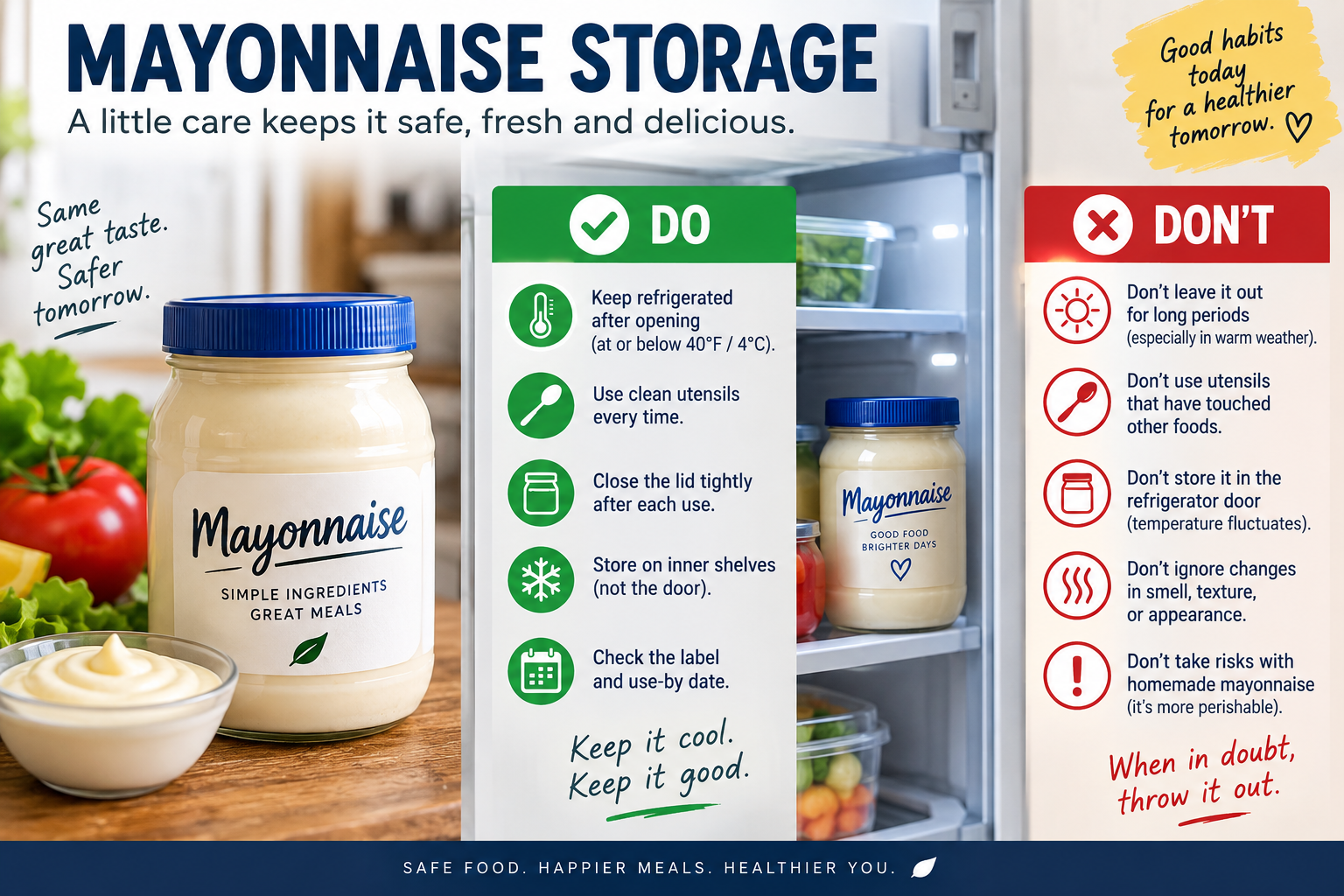
Refrigeration is one of the simplest ways to protect both the quality and safety of mayonnaise. Once opened, commercial mayonnaise should generally be kept refrigerated according to the product’s label, ideally at or below 40°F (4°C).
The biggest problems tend to occur when mayonnaise is left out for extended periods—especially during warm weather. A jar forgotten on the kitchen counter or left out throughout a long meal may become more concerning than one that is promptly returned to the refrigerator.
Where you store it in the refrigerator can matter, too. The refrigerator door experiences greater temperature fluctuations than the interior shelves, so keeping perishable foods in a consistently cold area is preferable.
Homemade Mayonnaise Needs Extra Care
Homemade mayonnaise deserves particular attention. Unlike many commercial products, it may contain raw or lightly cooked eggs and generally lacks the same preservation system found in packaged mayonnaise.
For that reason, homemade mayonnaise is more perishable. It should be refrigerated promptly, stored in a clean, sealed container, and consumed within a short period. If raw eggs are used, extra caution is warranted.
Simple Habits Can Make a Difference
Safe mayonnaise storage doesn’t require complicated rules. A few basic habits go a long way:
- Keep mayonnaise refrigerated after opening.
- Use clean utensils every time.
- Avoid leaving the jar out for prolonged periods.
- Close the lid tightly after each use.
- Follow the storage instructions and use-by guidance on the label.
- Be especially careful with homemade mayonnaise.
- If the product develops an unusual smell, appearance, or texture, discard it rather than taking a chance.
Mayonnaise itself isn’t something to fear. The bigger issue is how it is stored, handled, and exposed to temperature changes over time.
A little attention can help keep this everyday condiment safe, fresh, and enjoyable. When it comes to mayonnaise, good storage habits are simple—and well worth following.