
 By Admin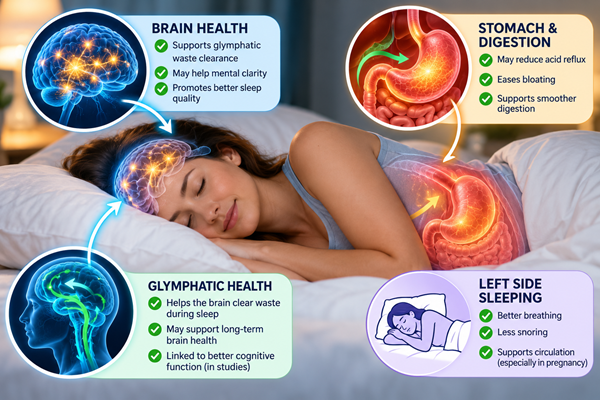
Sleep is essential for your body and mind, but have you ever considered whether your sleeping position could influence how you feel?
Some people sleep comfortably on their backs, while others prefer curling up on their sides or lying on their stomachs. Although comfort should always be a priority, your sleeping position may influence certain health concerns, including nighttime heartburn, snoring, and pressure on your joints.
One position that has received considerable attention is sleeping on your left side.
This position may be particularly helpful for people who experience acid reflux. It is also commonly recommended during pregnancy, and side sleeping may help reduce snoring in some individuals.
Researchers have also explored whether sleeping on your side could influence the brain’s waste-clearance system. However, some of these findings come from animal studies, and more human research is needed.
Let’s look at the potential benefits of left-side sleeping, how to make it more comfortable, and when another position might be a better choice.
5 Potential Benefits of Sleeping on Your Left Side
1. It May Help Relieve Acid Reflux
If you regularly experience heartburn at night, changing your sleeping position may help.
Acid reflux occurs when stomach contents flow back into the esophagus, causing symptoms such as a burning sensation in the chest, an unpleasant taste in the mouth, or discomfort after lying down.
The position of your stomach and esophagus means that lying on your left side may make it harder for stomach acid to flow upward. Research suggests that left-side sleeping can reduce nighttime acid exposure compared with sleeping on the right side in people with reflux.
To help manage nighttime symptoms, you can also try eating smaller evening meals, avoiding lying down immediately after eating, and elevating the head of your bed.
If heartburn occurs frequently or interferes with your sleep, speak with a healthcare professional.
2. It May Reduce Snoring
Snoring often happens when airflow becomes partially obstructed as the muscles and soft tissues around the throat relax during sleep.
For some people, sleeping on the back makes this problem worse because gravity encourages the tongue and surrounding tissues to move toward the back of the throat.
Sleeping on either side may help keep the airway more open and reduce snoring.
However, snoring can sometimes be a symptom of obstructive sleep apnea, a condition that causes repeated interruptions in breathing during sleep. Side sleeping may help some people, but it is not a substitute for medical evaluation or treatment.
If you regularly wake up gasping, experience pauses in breathing, or feel excessively tired during the day, consult your healthcare provider.
3. It May Support Comfortable Sleep During Pregnancy
Finding a comfortable sleeping position can become more difficult as pregnancy progresses.
A growing abdomen, back discomfort, and changes in circulation may make it harder to get a restful night’s sleep.
Sleeping on your side is generally recommended during later pregnancy. The left side is often suggested because it may support circulation to the uterus and placenta.
However, the right side can also be appropriate. Pregnant people should not panic if they wake up on their right side after falling asleep in another position.
As pregnancy advances, settling to sleep on your side is generally recommended over lying flat on your back. Follow the guidance of your maternity care professional for your individual needs.
A body pillow or a pillow placed between your knees may help support your abdomen, hips, and back.
4. It May Help Reduce Pressure on Your Back
Your sleeping position can influence how pressure is distributed across your spine, shoulders, and hips.
For some people, side sleeping provides a comfortable position that supports the natural alignment of the spine. It may be especially helpful when combined with a suitable pillow and supportive mattress.
However, sleeping on your side does not automatically prevent back pain. A pillow that is too high, a mattress that creates pressure points, or an awkward sleeping posture may contribute to discomfort.
For better support, consider placing a pillow between your knees and choosing a head pillow that keeps your neck aligned with your spine.
If side sleeping makes your pain worse, try adjusting your position rather than forcing yourself to remain on one side.
5. It May Influence the Brain’s Waste-Clearance System
One of the more interesting areas of sleep research involves the glymphatic system.
This system helps the brain clear certain metabolic waste products. Scientists have been investigating how sleep and body position might influence this process.
Some animal studies suggest that the brain’s waste-clearance processes may function differently depending on whether an animal sleeps on its side, back, or stomach.
These findings have raised questions about whether sleeping position could influence long-term brain health.
However, it is important to understand the limitations of the research. Scientists have not established that sleeping on your left side prevents Alzheimer’s disease, Parkinson’s disease, or other neurological conditions in humans.
For now, getting sufficient, good-quality sleep and maintaining healthy lifestyle habits remain more established priorities for supporting brain health.
How to Train Yourself to Sleep on Your Side
If you usually sleep on your back or stomach, switching positions may take some time. Fortunately, a few simple adjustments can make side sleeping more comfortable.
Choose a Supportive Pillow
Your pillow should keep your head and neck aligned with your spine.
A pillow that is too high can push your head upward, while one that is too flat may allow it to drop toward the mattress.
Choose a height and firmness that feel comfortable and provide consistent support.
Find a Comfortable Mattress
Your mattress can make a significant difference when sleeping on your side.
A mattress that is too firm may create uncomfortable pressure around your shoulders and hips. One that is too soft may allow your body to sink unevenly.
There is no single mattress firmness that works for everyone. Your body weight, sleeping habits, and personal comfort all matter.
Place a Pillow Between Your Knees
A pillow between your knees may help keep your hips more comfortable and reduce twisting through your lower back.
This simple adjustment can be especially useful if you experience stiffness after waking up.
Hug a Pillow or Use a Body Pillow
Some people find it easier to maintain a comfortable side position when hugging a pillow.
A longer body pillow can support the upper arm, abdomen, and legs while reducing the feeling of pressure on the shoulders.
Give Yourself Time to Adjust
You do not need to force yourself to remain on your left side throughout the entire night.
Changing positions during sleep is normal. If you want to try left-side sleeping for a particular concern, such as acid reflux, begin by settling into that position when you go to bed.
Avoid using uncomfortable or restrictive methods to prevent yourself from moving. Your sleep should remain restful and natural.
Possible Disadvantages of Sleeping on Your Side
Although side sleeping is comfortable for many people, it can also create problems under certain circumstances.
Shoulder and Hip Pain
When you sleep on your side, much of your body weight rests on the shoulder and hip closest to the mattress.
This pressure may aggravate existing joint pain or cause discomfort if your mattress does not provide appropriate support.
Try adjusting your pillow placement, changing mattress firmness if necessary, or switching to the other side.
Neck Stiffness
An unsuitable pillow can leave your neck tilted for several hours, potentially contributing to morning stiffness or discomfort.
Choose a pillow that fills the space between your head and shoulder without forcing your neck into an unnatural position.
Facial Pressure and Jaw Discomfort
Pressing one side of your face into a pillow for long periods may aggravate discomfort in some people, particularly those with jaw problems or facial tenderness.
If you notice that one sleeping position makes these symptoms worse, experiment with a different pillow or position.
People with glaucoma or other eye conditions should follow their eye specialist’s advice about sleeping posture rather than assuming that every side position is harmful.
Discomfort in People With Certain Heart Conditions
Some people with heart failure report feeling more uncomfortable or short of breath when lying on their left side.
However, left-side sleeping is not generally considered dangerous for people with healthy hearts.
If lying down causes shortness of breath, chest discomfort, or other concerning symptoms, seek medical advice. Sudden or severe chest pain or difficulty breathing requires emergency attention.
What About Sleeping on Your Back?
Back sleeping can be comfortable for some people and may help distribute body weight more evenly across the mattress.
Depending on the individual, it may be helpful for certain types of joint discomfort or make it easier to maintain a neutral neck position with the right pillow.
However, sleeping on the back can worsen snoring and obstructive sleep apnea in some people.
If you experience nighttime reflux, lying flat may also aggravate symptoms. Elevating the head of the bed can help some people with reflux, while a wedge pillow may be more effective than stacking several ordinary pillows.
For comfort, you can try placing a pillow beneath your knees to reduce tension in your lower back.
Is Sleeping on Your Stomach Bad for You?
Some people have slept on their stomachs for years and find it difficult to fall asleep in another position.
However, stomach sleeping can make it harder to keep the neck and spine comfortably aligned because the head is usually turned to one side for an extended period.
This position may contribute to neck or back discomfort in some people.
If you cannot comfortably switch to side sleeping, consider using a relatively thin head pillow and paying attention to how your neck and back feel in the morning.
Avoid forcing a change that leaves you unable to sleep. If you experience persistent pain, a healthcare professional or physical therapist can help you identify a suitable position.
Is Sleeping on Your Left Side Better Than Sleeping on Your Right?
The answer depends on your health concerns and comfort.
For people with nighttime acid reflux, the left side often has an advantage over the right. During pregnancy, side sleeping is generally recommended, but either side may be appropriate.
For people without particular symptoms, there is no need to assume that the left side is always superior.
| Sleeping position | Potential benefits | Possible drawbacks |
|---|---|---|
| Left side | May reduce nighttime acid reflux; useful during pregnancy | Can aggravate shoulder or hip discomfort |
| Right side | Comfortable for many people; an alternative to back sleeping | May worsen acid reflux in some individuals |
| Back | May distribute body weight evenly | Can worsen snoring or sleep apnea |
| Stomach | Comfortable for some habitual stomach sleepers | May contribute to neck or back discomfort |
The best position is one that allows you to sleep comfortably while taking any relevant medical conditions into account.
Frequently Asked Questions
Does sleeping on your left side improve digestion?
Left-side sleeping may help reduce nighttime acid reflux. However, there is not enough strong evidence to claim that it consistently prevents constipation, eliminates bloating, or improves digestion for everyone.
Can sleeping on your left side protect your brain?
Some animal studies have examined how side sleeping may affect the brain’s waste-clearance system. However, researchers have not established that sleeping on your left side prevents dementia or other neurological diseases in humans.
Is sleeping on your left side good for your heart?
There is no strong evidence that everyone should sleep on their left side specifically to improve heart health. People with certain heart conditions may find this position uncomfortable and should follow their healthcare provider’s advice.
Should you stay on your left side all night?
No. Most people naturally change positions during sleep. You can begin the night on your left side if it helps with a particular symptom, but you do not need to remain in that position all night.
What is the healthiest sleeping position?
There is no universally perfect sleeping position. Side sleeping may help with certain symptoms, while other positions may be more comfortable for different people. The goal is to get sufficient, restful sleep without worsening pain or other health concerns.
Final Thoughts
Sleeping on your left side may be worth trying if you experience nighttime acid reflux or are looking for a comfortable sleeping position during pregnancy. Side sleeping may also reduce snoring in some people.
However, claims about dramatically improving digestion or preventing serious brain diseases remain unproven.
Rather than worrying about maintaining one perfect position, focus on getting consistent, restorative sleep and finding a posture that works for your body.
A supportive pillow, a comfortable mattress, and a relaxing bedtime routine can make a meaningful difference.
Sometimes, improving your sleep starts with a small change—but the best change is the one that helps you rest comfortably and wake up feeling better.
Medical disclaimer: This article is for informational purposes only and is not a substitute for professional medical advice, diagnosis, or treatment. Consult a qualified healthcare professional if you have persistent sleep problems, pain, breathing difficulties, or concerns about a medical condition.