 By Admin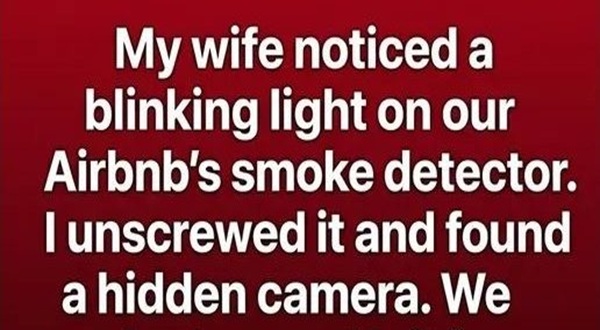
Couple Discovers Hidden Camera in Their Vacation Rental — And Uncovers a Disturbing Truth About Traveler Privacy
Vacations are supposed to be an escape — a break from routine, a few days to unwind in a new place. With short-term rental apps now dominating how people travel, we’ve grown used to trusting the process: nice photos, glowing reviews, a few clicks, done. A high star rating feels like proof that a place is safe. But as more rentals get outfitted with smart devices, the boundary between “helpful tech” and “invasive surveillance” keeps getting blurrier — and more guests are starting to notice.
One couple found this out the hard way on what was meant to be a relaxing trip. They’d booked a well-reviewed property expecting little more than a nice view and a comfortable bed. After arriving and starting to unpack, they noticed something odd while looking around the living room — a smoke detector on the ceiling with a light blinking in a strange, rapid pattern.
Most smoke detectors have some kind of indicator light, but this one felt off. Curious, they grabbed a step stool to get a closer look. What they found stopped them cold: tucked behind the casing was a camera lens, deliberately hidden. The realization hit hard — they’d been under watch in the one place they expected complete privacy.
They didn’t stick around to sort it out with the host. Within minutes, they’d packed up and left, checking into a nearby hotel instead. A trip meant for relaxation turned into a rush to feel safe again. The unsettling part wasn’t just finding the camera — it was realizing how completely their trust had been betrayed.
Once safely locked in their hotel room, they felt they had to speak up. They took photos of what they’d found and posted their story online, hoping to warn other travelers. But things got worse when they looked back through their own pictures of the living room — they noticed strange reflections and odd placements among other electronics, hinting that another hidden device might have been planted somewhere in the room. They couldn’t confirm it, but the possibility alone was enough to keep them up all night.
This story points to a bigger problem spreading through the short-term rental industry. Smart locks, connected devices, and automated thermostats can genuinely improve a stay — but that same technology can just as easily be turned against the people using it. This couple’s experience is a reminder that booking a rental means trusting strangers with your safety, not just your comfort.
It’s pushed many to rethink how carefully they check a space. Inspecting the sheets and testing the faucet isn’t enough anymore. Travelers now have to look closer — checking if a device seems out of place, if a light blinks strangely, or if something electronic has a clear line of sight to a bed or bathroom. If something feels wrong, that’s reason enough to leave. No five-star rating is worth trading away your privacy.
The incident has also reignited calls for stronger accountability from rental platforms. If hosts are allowed to install smart devices, platforms need clear rules about disclosure and placement. Without real oversight, guests are left to fend for themselves — and right now, the pace of innovation in this industry has outrun any serious effort to protect the people staying in these homes.
In the end, this couple’s story is a sobering reminder for anyone who books a rental: privacy can vanish in an instant, hidden behind something as ordinary as a smoke detector. As more of these spaces become “smart,” staying alert matters more than ever. Convenience should never come at the cost of peace of mind — and everyone deserves to lock a door and know, for certain, that no one’s watching from the other side. What started as a stressful ordeal ended up teaching a lesson worth remembering: trust your instincts, document what you find, and don’t hesitate to walk away from anywhere that starts to feel like a trap.