What Your Legs Can and Can’t Reveal About You
From the way you stand to the way you walk, your body is constantly communicating. While facial expressions and hand gestures often get the most attention, body language experts have long recognized that posture and movement can offer clues about how a person is feeling in the moment.
Your legs, in particular, play a surprisingly important role in nonverbal communication. Although they can’t reveal your personality with certainty, they may reflect your comfort level, confidence, or emotional state in a given situation.
Here’s what science—and a bit of common observation—can tell us.
Your Posture Speaks Before You Do
Long before you say a word, your stance sends signals to the people around you.
Someone standing with feet shoulder-width apart and weight evenly balanced may appear confident, relaxed, and comfortable in their surroundings. On the other hand, tightly crossed legs, feet turned inward, or constant shifting can sometimes suggest nervousness, uncertainty, or simply a desire to feel more comfortable.
It’s important to remember that these are not hard rules. Body language is influenced by countless factors, including culture, physical comfort, personality, injuries, and the situation itself.
Your Leg Shape Is Mostly Determined by Genetics
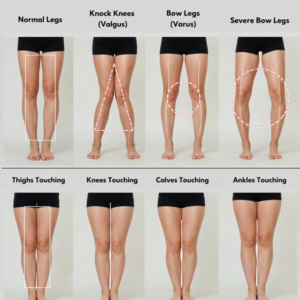
Social media has created endless conversations about leg shapes, thigh gaps, and body proportions. In reality, much of your lower-body appearance comes down to genetics.
Bone structure, hip width, muscle distribution, and natural alignment all influence how your legs look. Variations such as slight curves, knees that touch, or wider spacing between the ankles are completely normal and are usually not signs of poor health.
There is no single “perfect” leg shape.
Healthy bodies come in many different forms.
Daily Habits Shape the Way You Move
How you walk often reflects your lifestyle more than your personality.
A runner may develop a powerful, efficient stride.
A dancer often moves with fluid balance and control.
Someone who spends long hours at a desk may naturally have tighter hips and shorter steps.
Everyday activities slowly influence posture, flexibility, and movement patterns over time.
Your walk is less about who you are and more about how your body has adapted to the life you live.
Clothing Can Change the Story
Fashion doesn’t change your anatomy, but it can dramatically influence how your legs appear.
Wide-leg pants create the illusion of longer legs and graceful movement.
Straight-leg jeans offer a balanced silhouette.
Tailored clothing emphasizes natural proportions, while flowing fabrics create softness and motion.
Choosing clothes that fit well is usually far more important than chasing trends designed around unrealistic body ideals.
Confidence Is Often Reflected in Movement
People who feel comfortable in themselves often move differently.
They tend to stand taller, walk with purpose, and make relaxed, natural movements.
Meanwhile, someone experiencing stress or anxiety may unconsciously hunch their shoulders, shorten their stride, or keep their feet close together.
These behaviors don’t define someone’s personality—they simply reflect how they may be feeling at that particular moment.
Your Legs Do More Than Support You
It’s easy to focus on appearance, but your legs deserve appreciation for what they actually accomplish every day.
They carry you through work.
They help you exercise.
They allow you to travel, play with your children, climb mountains, dance, and explore the world.
Strength, balance, and mobility are far more meaningful measures of health than appearance alone.
Take Care of Your Foundation
Healthy legs rely on consistent movement and good habits.
Simple ways to support long-term leg health include:
- Walking regularly.
- Stretching your hips, calves, and hamstrings.
- Maintaining a healthy weight.
- Wearing supportive footwear when appropriate.
- Strengthening your core and lower-body muscles.
- Avoiding sitting for long periods without standing or walking.
Small daily habits can improve mobility and reduce discomfort as you age.
The Bottom Line
Your legs tell part of your story—but not the whole story.
They reflect your anatomy, your lifestyle, your movement habits, and sometimes your emotions. They do not define your intelligence, confidence, attractiveness, or worth.
Rather than comparing your legs to someone else’s, appreciate everything they allow you to do every single day.
Stand comfortably. Move naturally. Focus on strength instead of perfection.
Because the most impressive thing about your legs isn’t how they look—it’s where they can take you next.
Related Posts
-
 Love at First Sight: Our Instant Connection
-
 A Group Of Teens Leaves A Modest Tip For Their Waiter, But A Surprising Note Arrives Days Later
-
 She was among the most stunning and well-known women in the world 35 years ago. Now…
-
 My Father Was Hired to Repair My Boss’s Pool—Then He Found Something Buried Beneath It
About The Author